


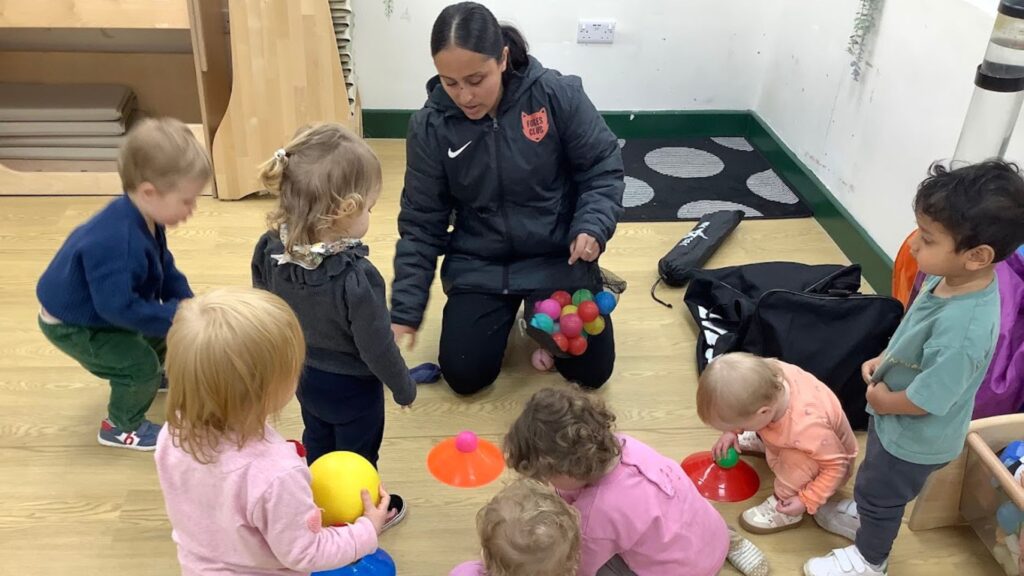
Starting Nursery: How to Help Your Child Settle In
Starting nursery is a big milestone for both children and their families. It can bring excitement, new friendships and new experiences, but it can also take a little time for children to feel completely comfortable in an unfamiliar environment.
Every child is different. Some will confidently explore their new surroundings from the first day, while others may need more time and reassurance before nursery begins to feel familiar.
So, what can parents do to help make the transition a little easier?
Talk Positively About Nursery
In the days and weeks before starting nursery, talk to your child about what is going to happen in a simple and positive way.
You might talk about playing with new toys, spending time outside, meeting other children or getting to know their practitioners.
For older toddlers and preschool children, books and role play can also be useful ways of exploring the idea of starting nursery. Children often process new experiences through play, so pretending to pack a nursery bag or acting out saying goodbye and coming back later can help make the experience feel more familiar.
Try to keep expectations realistic too. Nursery is a big change, and it is perfectly understandable if a child feels uncertain about it at first.
Make the Most of Settling-In Sessions
Settling-in sessions give children an opportunity to become familiar with their new environment before attending for longer periods.
They can begin to explore the room, meet practitioners, discover where things are and gradually understand the nursery routine.
They are also valuable for parents and practitioners. Sharing information about your child’s routines, interests, comforters, favourite activities and the ways they communicate when they are tired, hungry or upset can help practitioners get to know them as an individual.
The more information nursery has, the easier it is to provide continuity between home and the setting.
Get to Know Your Child’s Key Person
Within the EYFS, every child attending an early years setting has a key person.
Their role is particularly important when a child first starts nursery. Over time, the key person becomes a familiar and trusted adult who understands the child’s individual needs, interests and routines.
For children, knowing that there is someone familiar waiting for them can help create a sense of security within what is initially a very new environment.
For parents, the key person also provides an important connection between home and nursery. Regular conversations help both sides understand how the child is settling and whether anything might be making the transition easier or more difficult.
Keep Goodbyes Warm but Consistent
Drop-off can sometimes be the hardest part of starting nursery.
If your child becomes upset when you leave, it can be tempting to stay for longer or leave while they are distracted. However, establishing a clear and predictable goodbye can help children understand what happens next.
A cuddle, a reassuring goodbye and a reminder that you will return creates a routine that gradually becomes familiar.
Children are also very good at noticing how the adults around them are feeling. Keeping your goodbye calm and positive can help communicate that nursery is a safe place and that you are comfortable leaving them with the people caring for them.
And remember: an emotional goodbye does not necessarily mean an unhappy day at nursery. Many children become absorbed in an activity surprisingly quickly once the transition itself has passed.
Bring a Little Familiarity from Home
For some children, having something familiar nearby can provide reassurance while they adjust to nursery.
Depending on the setting and the child’s age, this might be a favourite comforter, teddy or another familiar item from home.
Familiar routines can be just as helpful. If practitioners know how a child usually settles for sleep, what songs they enjoy or what activities make them smile, they can use these little pieces of home to help build a relationship with them.
As children become increasingly confident in their nursery environment, they will often begin to rely less on these familiar comforts.
Give Them Time
Perhaps the most important thing to remember is that there is no universal timetable for settling into nursery.
One child may settle almost immediately. Another may happily attend for several days before suddenly finding drop-offs difficult. Others may need a gradual transition over a longer period.
This does not necessarily mean something is wrong.
Starting nursery introduces children to new adults, children, routines, sounds, environments and expectations all at once. Building secure relationships takes time.
Consistency between parents and nursery can make a significant difference. Sharing how your child has been at home, discussing any changes and listening to feedback from practitioners means everyone can work together to support them.
A New Chapter
Once children begin to feel secure, nursery can open the door to an enormous range of experiences.
They start forming relationships beyond their immediate family, developing independence, exploring new interests and becoming part of their own little community.
There may be a few difficult goodbyes along the way, and that is okay. Settling into nursery is a process rather than a single moment.
At kGems Day Nurseries, we understand that starting nursery is a significant transition for the whole family. Building strong relationships between children, parents and practitioners helps create the secure foundation children need to explore, play, learn and, eventually, walk through the nursery door as though they have always belonged there.
Our Nurseries
- 020 3490 0670
- valentines@kgems.co.uk
- Valentines Park, Cranbrook Road, Ilford IG1 4UA
- 020 3078 9494
- clayhall@kgems.co.uk
- Clayhall Park, Longwood Gardens, Ilford IG5 0EB
- 020 8050 8001
- islington@kgems.co.uk
- 85 St. Pauls Road, Islington N1 2NA
- 020 8050 8005
- leytonstone@kgems.co.uk
- 11 Kirkdale Road, Leytonstone E11 1HP
- 01376 560 560
- braintree@kgems.co.uk
- The Chapel, High Garrett, Braintree CM7 5NX
Links

© 2026 Knowledgems Global Ltd Trading As kGems Day Nurseries, All Rights Reserved.


