


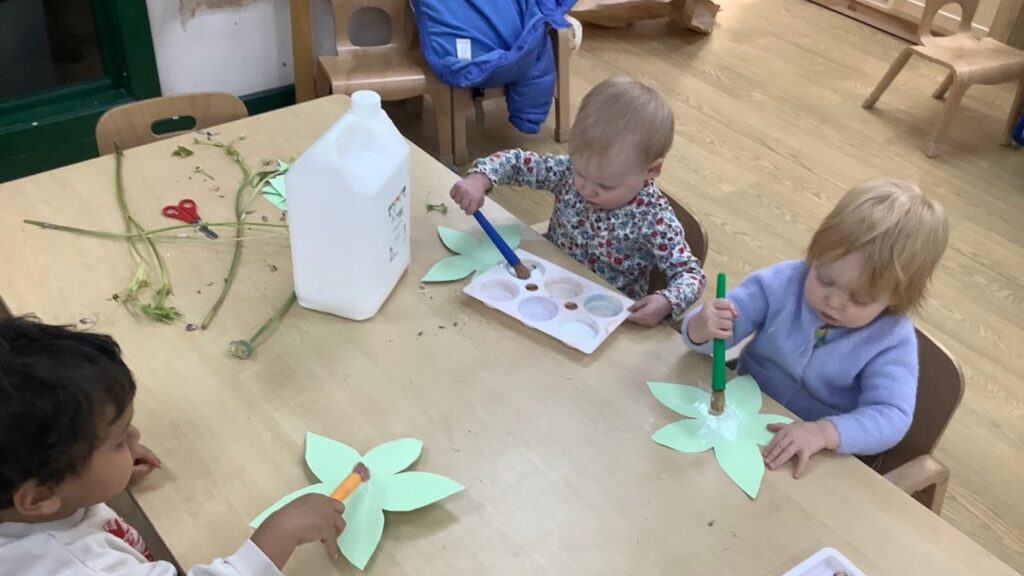
How We Help Quiet Children Find Their Confidence at Nursery
Every child approaches new people, places and experiences differently. While some children are ready to jump straight into an activity, others prefer to observe, take their time and become familiar with their surroundings before joining in.
At kGems Day Nurseries, we understand that being quiet or reserved is simply part of who some children are. Our role is not to change their personality, but to create a warm, secure environment where they feel comfortable building relationships, exploring and expressing themselves at their own pace.
Understanding Each Child
Some children naturally need more time to observe before they feel ready to participate. Rather than putting them under pressure to join in, our practitioners follow each child’s pace while gently creating opportunities for interaction and connection.
As children become familiar with their surroundings, routines and the people around them, their confidence often begins to grow naturally.
Building a Strong Key Person Relationship
Every child is assigned a key person who becomes a familiar and trusted adult at nursery. For children who take a little longer to settle into new environments, this relationship can be particularly valuable.
Their key person welcomes them each day, gets to know their interests and preferences, and provides reassurance and consistency throughout the settling-in period. Having someone they know and trust nearby gives children a secure base from which they can begin to explore and build relationships with others.
Starting with Smaller Social Experiences
Large group activities can sometimes feel overwhelming for children who are still finding their feet. We may begin by encouraging play alongside one or two other children, allowing relationships to develop naturally.
Parallel play – where children play alongside each other without necessarily interacting directly – is an important part of early social development. Over time, practitioners can gently model ways to join in, share ideas and play together.
Small moments such as exchanging a smile, sharing a toy or making a comment can all be meaningful signs that a child is becoming more comfortable.
Giving Children Time and Space
Children should never feel pressured to speak, perform or participate before they are ready. Instead, we give them opportunities to make choices and take an active role in their day.
Simple questions such as “Would you like to paint or look at books?” allow children to communicate their preferences while giving them a sense of control.
Different environments can also bring out different sides of a child. Some children who are quieter indoors become much more expressive during outdoor play, where there is more space to explore, move and interact naturally.
Using Their Interests to Build Connections
A child’s interests can be a wonderful starting point for building relationships.
Whether they love trains, dinosaurs, animals, drawing or imaginative play, our practitioners use those interests to create opportunities for shared experiences. When children are engaged in something familiar and enjoyable, interacting with adults and other children can feel much more natural.
Recognising the Little Moments
Building confidence doesn’t always happen through big milestones. Often, it grows through lots of small experiences.
Our practitioners recognise children’s efforts with positive, specific encouragement. Rather than focusing on how quiet or confident a child is, we acknowledge what they have achieved: “You watched carefully and then decided to join in,” or “I noticed you shared your car with your friend.”
This helps children recognise their own progress without feeling pressure to behave in a particular way.
Working in Partnership with Parents
Parents know their children better than anyone, which is why communication between home and nursery is so important.
We keep families updated on how their child is settling, including the little moments of progress that parents may not get to see themselves. We can also share simple strategies that families can use at home, such as keeping goodbyes short and reassuring or celebrating positive social experiences.
With consistency, patience and encouragement from both home and nursery, children are given the time and security they need to flourish.
Confidence Looks Different for Every Child
There is no single definition of a confident child. Confidence does not always mean being the loudest person in the room or the first to volunteer.
A child who quietly observes before joining an activity, develops a close friendship or begins sharing their ideas with a trusted adult is building confidence too.
At kGems Day Nurseries, we believe every child deserves to feel valued for exactly who they are. Whether your little one is naturally outgoing or prefers to take their time in new situations, our teams in Islington, Valentines Park, Clayhall Park and Leytonstone will support them with patience, warmth and understanding.
If your child takes a little time to feel comfortable in new environments and you would like to see how we support children at nursery, we warmly invite you to book a stay-and-play session at kgems.co.uk
You can also follow us on Instagram @kgemsdaynurseries for a glimpse into everyday life at kGems Day Nurseries.
Our Nurseries
- 020 3490 0670
- valentines@kgems.co.uk
- Valentines Park, Cranbrook Road, Ilford IG1 4UA
- 020 3078 9494
- clayhall@kgems.co.uk
- Clayhall Park, Longwood Gardens, Ilford IG5 0EB
- 020 8050 8001
- islington@kgems.co.uk
- 85 St. Pauls Road, Islington N1 2NA
- 020 8050 8005
- leytonstone@kgems.co.uk
- 11 Kirkdale Road, Leytonstone E11 1HP
- 01376 560 560
- braintree@kgems.co.uk
- The Chapel, High Garrett, Braintree CM7 5NX
Links

© 2026 Knowledgems Global Ltd Trading As kGems Day Nurseries, All Rights Reserved.


